TRT & HORMONE HEALTH
Written by Malek Haver, MSN, FNP-C
Medically reviewed by Malek Haver, MSN, FNP-C

Short answer: TRT supplies testosterone from outside the body, while enclomiphene is intended to stimulate the body’s own hormone signaling. The TRT vs enclomiphene decision can affect fertility, expected laboratory patterns, dosing, side effects, and monitoring. Neither option is automatically best for every man. For a related medication comparison, see our enclomiphene versus Clomid guide.
A useful comparison begins with the diagnosis and the patient’s goals. Symptoms, repeat hormone testing, the likely cause of low testosterone, fertility plans, and medical history should guide the discussion.
TRT vs enclomiphene at a glance
Testosterone replacement therapy directly raises testosterone through an external formulation such as an injection or topical product. Because the body detects that external testosterone, pituitary signaling through luteinizing hormone and follicle-stimulating hormone can decrease.
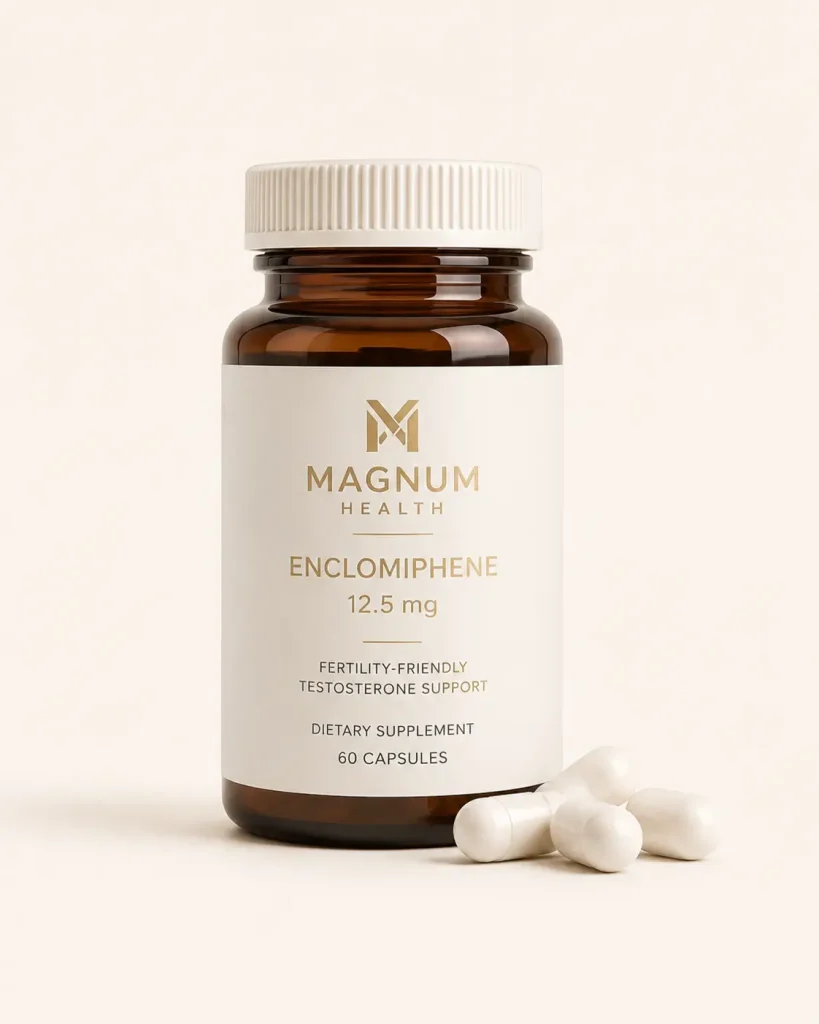
Enclomiphene acts differently. It is a selective estrogen receptor modulator designed to increase pituitary signaling, which may encourage the testes to produce more testosterone when that signaling pathway is capable of responding. There is no FDA-approved standalone enclomiphene product in the United States. The FDA’s May 2026 compounding list places enclomiphene citrate in Category 1, meaning the nominated bulk substance remains under evaluation. A compounded preparation is not FDA-approved, so the prescribing clinician and pharmacy should clearly explain its status, evidence, and sourcing.
7 practical differences
1. Where the testosterone comes from
TRT replaces testosterone directly. Enclomiphene attempts to increase endogenous, or internally produced, testosterone. That distinction helps explain many of the other differences.
2. Fertility considerations
External testosterone can suppress intratesticular testosterone and sperm production. Enclomiphene may be discussed when preserving fertility is important, but it is not a guarantee of normal semen parameters or future fertility. Men actively trying to conceive may need a reproductive evaluation and semen analysis.
3. Who may respond
Enclomiphene depends on a functioning hypothalamic-pituitary-testicular pathway. It may not be appropriate when the testes cannot respond adequately or when another underlying condition requires different management. TRT may raise serum testosterone more directly, but the full risk-benefit discussion still matters.
4. Laboratory patterns
TRT commonly reduces LH and FSH. Enclomiphene generally aims to increase those signals. Follow-up should evaluate more than total testosterone; symptoms, adverse effects, blood counts, and other selected markers remain important.
5. Route and routine
TRT is available in several formulations with different dosing schedules, transfer risks, peak-and-trough patterns, and costs. Enclomiphene is generally discussed as an oral approach. Convenience should not replace a medical assessment of suitability.
6. Side effects and uncertainties
Testosterone can increase hematocrit and blood pressure and may cause acne, fluid retention, breast symptoms, or other effects. Enclomiphene side effects and other SERM-related adverse effects should also be reviewed because these treatments are not risk-free. Patients should understand what symptoms require a call or urgent evaluation.
7. Monitoring and long-term planning
Both approaches require follow-up. The plan may include hormone levels, a complete blood count, blood pressure, symptom response, fertility-related testing, and other individualized markers. Patients should also discuss what happens if treatment is stopped or goals change.
How clinicians approach the decision
The TRT vs enclomiphene conversation often begins with LH and FSH because these tests help distinguish testicular from pituitary or hypothalamic patterns. Prolactin, SHBG, free testosterone, thyroid testing, iron studies, or pituitary evaluation may be appropriate in selected cases.
Fertility should be raised before treatment, not after sperm counts fall. The American Urological Association and American Society for Reproductive Medicine advise against prescribing exogenous testosterone to men interested in current or future fertility. An individualized alternative may be considered when clinically appropriate.
Questions to ask before choosing
- Is low testosterone confirmed on repeat morning testing?
- What is the likely cause of the abnormal result?
- Do I want children now or in the future?
- What evidence supports this option for my situation?
- Is the prescribed product FDA-approved, off-label, or compounded?
- Which laboratory values and symptoms will be monitored?
- What would cause the plan to be adjusted or stopped?
Frequently asked questions
Is enclomiphene the same as testosterone?
No. Testosterone replaces the hormone directly. Enclomiphene is intended to alter hormone signaling so the body may produce more of its own testosterone.
Does enclomiphene always preserve fertility?
No. The mechanism may be more compatible with preserving sperm production than exogenous testosterone, but individual response varies. Fertility goals may justify semen testing and specialist involvement.
Can someone switch from TRT to enclomiphene?
A transition should be clinician-guided. Recovery of natural signaling and sperm production can vary, and an alternative may not be suitable for every cause of low testosterone.
This article is for general educational purposes and does not replace individualized medical advice, diagnosis, or treatment. Testing and treatment decisions vary by patient.