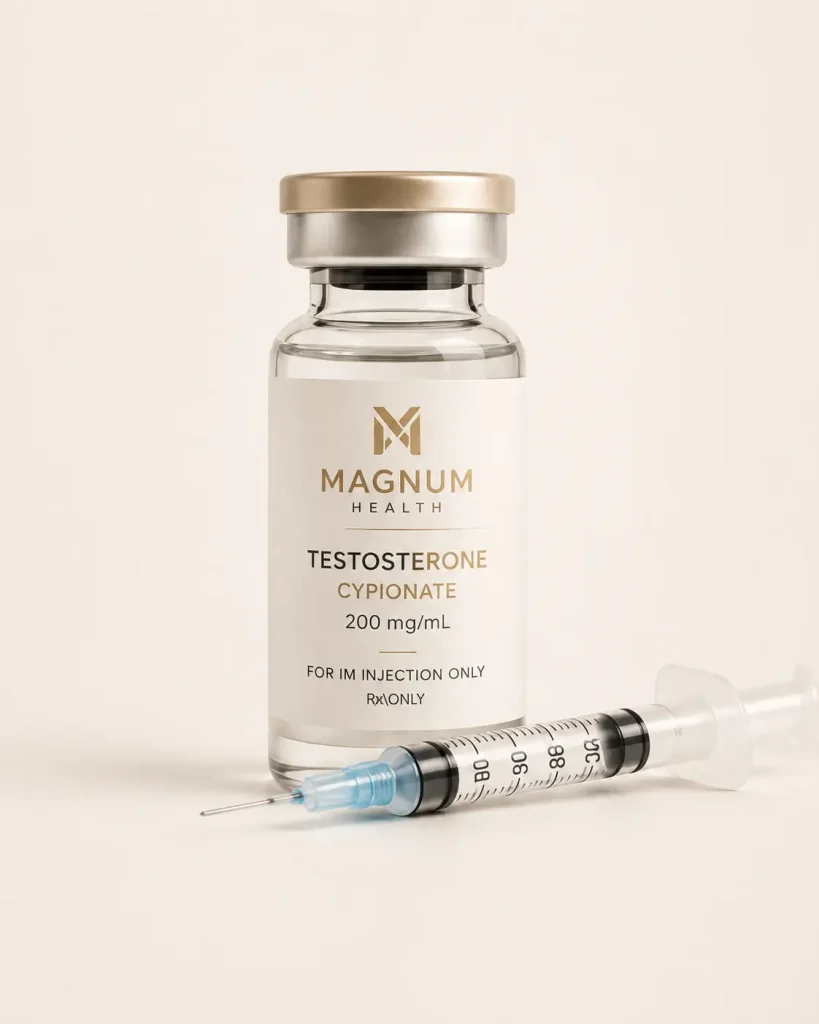
Short answer: TRT may speed up male-pattern hair loss in men who are prone to it. It does not make every man lose his hair. Genetics and the way hair follicles respond to DHT, a hormone made from testosterone, play a large role. A new change in your hair still needs a review of other possible causes.
New shedding should not automatically be blamed on testosterone. Stress, illness, thyroid disease, low iron, rapid weight loss, and other conditions can also cause hair loss.
1. Genes and hair-follicle sensitivity matter
Male-pattern hair loss, also called androgenetic alopecia, often causes a receding hairline and thinning at the crown. It runs in families. In men who are prone to it, DHT can make hair follicles produce shorter, finer hairs over time.
Two men with similar testosterone or DHT levels can have very different hairlines because their follicles respond differently. A family history on either side of the family may increase risk.
2. TRT can increase DHT
An enzyme called 5-alpha-reductase turns some testosterone into DHT. TRT can raise DHT levels. The amount varies with the dose, type of treatment, and how your body processes it.
A higher DHT level does not mean hair loss is certain. A blood test cannot fully show how sensitive your scalp follicles are. Review new or faster hair loss with your prescriber rather than assuming TRT is the cause.
3. Timing and pattern provide clues
Male-pattern hair loss usually develops slowly at the hairline, temples, or crown. Sudden shedding across the scalp can have another cause. One example is telogen effluvium, when many hairs enter a resting phase after illness, major stress, surgery, rapid weight loss, or poor nutrition.
Bald patches, scalp pain, thick flakes, or broken hairs can point to other causes. A dermatologist, a doctor who treats skin and hair, can check the scalp and discuss tests or treatment.
4. Do not change your TRT dose on your own
Do not skip doses, take extra testosterone, or change your schedule on your own. That can make hormone levels swing. Tell your prescriber if hair loss starts or speeds up. Review when it began, your dose, test results, and other possible causes.
The goal is to bring testosterone into a healthy range and improve confirmed low-T symptoms. A higher dose is not always better. Too much testosterone can raise blood pressure or hematocrit, the share of your blood made up of red blood cells. Read our overview of TRT side effects for other changes worth reporting.
5. Hair-loss treatments have tradeoffs
Topical minoxidil is a liquid or foam applied to the scalp. It is available without a prescription and may slow male-pattern hair loss or help hair grow. Results take time and require continued use. Early shedding or scalp irritation can occur.
Finasteride and dutasteride reduce the amount of testosterone turned into DHT. Oral finasteride 1 mg is FDA-approved for male-pattern hair loss in men. Dutasteride is approved for an enlarged prostate; using it for hair loss is off-label in the United States. That means the FDA has not approved it for that use.
These medicines can cause side effects, including sexual problems. Changes in mood, breast tissue, or fertility have also been reported. Finasteride lowers PSA, a blood marker used in prostate screening, so tell the clinician ordering the test if you take it. Review risks, fertility plans, and other medicines before adding a hair-loss treatment.
6. Baseline photos make change easier to judge
Hair changes are slow and easy to misremember. Before TRT, take clear photos of the hairline, temples, crown, and part under the same light. Repeat them every few months. This provides a more useful comparison than checking the mirror every day.
If the pattern is unusual, your clinician may check your thyroid, iron, diet, recent illness, and weight changes. Weight loss can sometimes trigger shedding. Getting enough protein and avoiding a crash diet supports health, but it does not prevent genetic hair loss.
Should hair loss stop you from considering TRT?
Not automatically. First, confirm whether you have low testosterone. Then weigh the likely benefits, risks, and how much keeping your hair matters to you. A man with clear symptoms and two low tests may still choose monitored treatment.
TRT needs a medical reason. It is not a treatment for bodybuilding or hair growth, and tiredness alone is not enough for a diagnosis. Review testing before TRT before starting. Also discuss plans for children because TRT can lower sperm production.
When should you seek prompt care?
Hair loss is rarely an emergency. Seek an exam for sudden heavy shedding, scalp pain, redness, scars, loss of eyebrows, or other new symptoms. During TRT, chest pain, severe trouble breathing, or weakness on one side needs urgent care. Do not wait for a routine hair-loss visit.
Frequently asked questions
Does TRT always cause hair loss?
No. Genes and the way hair follicles respond to hormones play a large role. Some men notice faster hair loss, while others see little change.
Will lowering the TRT dose regrow hair?
Not necessarily. Dose changes may reduce androgen exposure, but hair follicles that have already become smaller may not recover. Any adjustment should be based on symptoms, labs, safety, and medical guidance.
Can I take finasteride while on TRT?
Some men use both, but a clinician should review the risks first. Finasteride can cause side effects and lower PSA. Tell the clinician who orders your prostate screening test if you take it.
Does a high DHT blood test predict baldness?
No. A DHT blood test cannot tell you for sure whether you will lose hair. Genes and the way your scalp follicles respond also matter.
This article is for general education and does not diagnose hair loss or recommend a specific treatment. Medication decisions should be made with a qualified clinician.