LAB TESTING

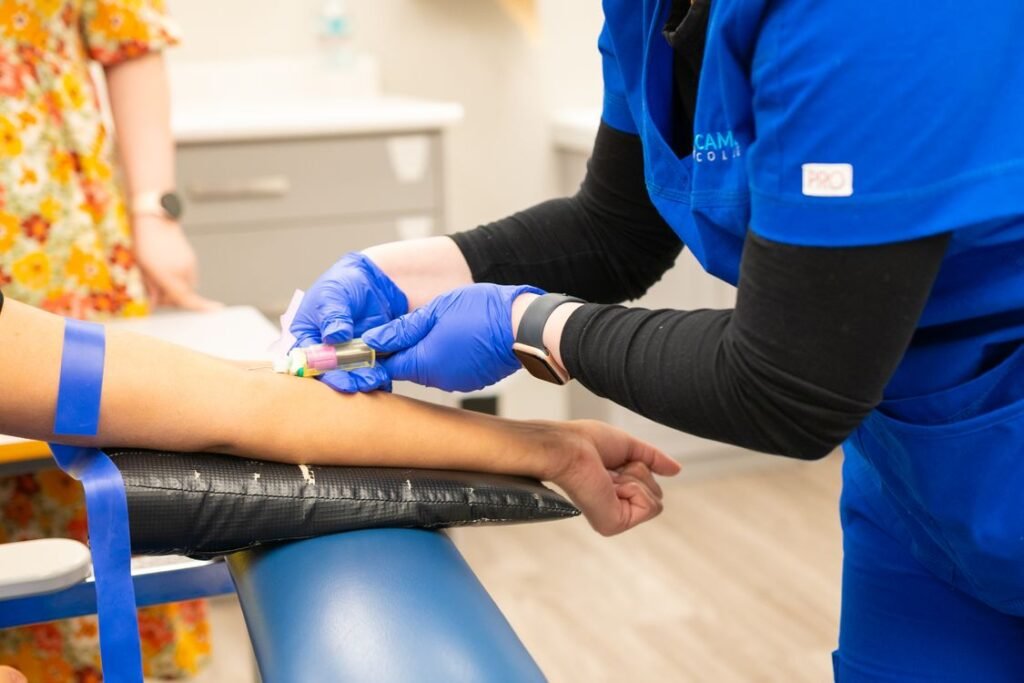
Short answer: TRT lab monitoring commonly includes testosterone levels, a complete blood count with hematocrit, blood pressure, symptom response, adverse effects, and prostate-related review when appropriate. Timing depends on the formulation, dose changes, baseline risk, and previous results.
Monitoring is not simply a way to find a “perfect” testosterone number. Its purpose is to confirm clinical benefit, identify unwanted effects, and keep the regimen aligned with the diagnosis and patient’s goals.
When are labs checked during TRT?
Guidelines commonly recommend early reassessment after treatment begins, another review after dose or formulation changes, and periodic follow-up once the regimen is stable. The Endocrine Society describes evaluation after initiation to assess response, adverse effects, and adherence; the American Urological Association recommends measuring testosterone every 6 to 12 months during stable therapy.
Some patients require closer follow-up because of elevated hematocrit, blood pressure, prostate risk, symptoms, changing medications, or inconsistent results. The prescriber should give specific timing instructions.
6 parts of TRT lab monitoring
1. Total testosterone
The result helps determine whether the current regimen produces an appropriate level without unnecessary exposure. Interpretation requires knowing the formulation, dose, dosing frequency, last administration time, and blood-draw time.
2. Free testosterone or SHBG when indicated
These tests can be helpful when total testosterone does not match symptoms or a condition affecting SHBG is present. They are not automatically necessary at every visit.
3. CBC, hemoglobin, and hematocrit
Testosterone can increase red blood cell production. A rising hematocrit may require repeat testing, evaluation for contributing factors such as sleep apnea or smoking, and adjustment or interruption of treatment.
4. Blood pressure
In 2025, the FDA required class-wide testosterone labeling updates about increased blood pressure. Blood pressure should be reviewed at baseline and during treatment, particularly when it is already elevated or cardiovascular risk is present.
5. Prostate-related monitoring when appropriate
PSA testing and prostate evaluation depend on age, risk, symptoms, baseline findings, and shared decision-making. New urinary symptoms or a concerning change should not wait for the next routine lab date.
6. Symptoms, side effects, and treatment goals
A laboratory panel cannot measure the entire outcome. The visit should address energy, sexual symptoms, mood, sleep, acne, swelling, breast symptoms, injection or application problems, fertility plans, and whether the original goals are being met.
Why blood-draw timing matters
Different testosterone formulations create different concentration patterns. An injection result near a peak can look very different from one drawn near the end of the interval. Topical products have their own collection considerations and contamination risks.
Use the timing given by the prescriber and report it accurately. Comparing results collected at similar points in the dosing cycle makes trends more meaningful.
What may trigger a treatment change?
A change may be considered when testosterone exposure is too high or low, symptoms do not improve despite an adequate trial, hematocrit rises, blood pressure worsens, TRT side effects become unacceptable, fertility goals change, or another condition better explains the symptoms.
The response could involve dose, interval, formulation, additional evaluation, or stopping therapy. Patients should not independently change dosing based on one portal result.
Frequently asked questions
Are labs needed before every refill?
Not necessarily. Refill requirements vary with clinical status, controlled-substance rules, previous results, and practice policy. Stable patients may have a different schedule from patients early in treatment.
Is estradiol always checked?
No. It may be useful when breast symptoms, gynecomastia, or another specific concern is present. Routine testing and treatment should not be driven by a universal target for every patient.
What if I miss a scheduled lab?
Contact the care team rather than guessing about dose timing. The clinician can explain whether the test should be rescheduled and how treatment or refills will be handled.
This article is for general educational purposes and does not replace individualized medical advice, diagnosis, or treatment. Testing and treatment decisions vary by patient.