Short answer: Low testosterone can have several causes. These include testicle problems, weaker hormone signals from the brain, some medicines, excess weight, poor sleep, serious illness, and aging. One low blood-test result does not tell you the cause or prove you need treatment.
Treatment depends on the cause. Some problems improve with better sleep, weight loss, or other care. Lasting problems in the testicles or hormone signals may need a different plan.
How the body controls testosterone
The brain and testicles work together to make testosterone. The hypothalamus and pituitary are small parts of the brain that control hormone signals. One signal, LH, tells the testicles to make testosterone. FSH helps support sperm production. A testicle problem is called primary hypogonadism. A problem with the brain’s signals is called secondary hypogonadism.
Your provider reviews symptoms and repeat morning blood tests. LH, FSH, and other tests may help show where the problem starts. The next step is to find the cause, rather than treat a number alone.
8 causes and contributors to low testosterone
1. Testicular injury or disease
Injury, infection, cancer treatment, or testicular torsion can affect testosterone production. Torsion means a testicle twists and loses blood flow. If the testicles cannot respond well, LH may rise as the brain sends a stronger signal.
Tell your provider about past testicle pain, surgery, injury, cancer treatment, or trouble having children.
2. Pituitary or hypothalamic conditions
A pituitary tumor, brain surgery, radiation, or head injury can weaken hormone signals. High prolactin, another hormone, can also lower testosterone. LH and FSH may be low, or within the lab range but too low for the testosterone result.
Get prompt care for a severe headache, new vision problems, or fluid from a nipple. Most men with a low result do not have a pituitary tumor. Still, these symptoms may call for more testing.
3. Obesity and metabolic health
Men with obesity often have lower total testosterone. Excess weight can affect hormone signals and SHBG, a protein that carries testosterone in the blood. Sleep apnea and other health problems may also play a role. Losing weight can raise testosterone in some men, but results vary.
Low total testosterone does not always mean low free testosterone. Free testosterone is the small share not bound to proteins. Your provider may check it when SHBG is altered. Read our guide to SHBG and testosterone.
4. Sleep apnea and poor sleep
Poor sleep can affect testosterone, energy, and sex drive. Sleep apnea causes repeated pauses in breathing during sleep. Severe sleep apnea should be treated before starting TRT because testosterone may worsen breathing problems in some men.
Loud snoring, witnessed breathing pauses, morning headaches, or severe daytime sleepiness should not be dismissed as “just low T.” Learn more about sleep apnea and low testosterone.
5. Opioids, steroids, and other medications
Long-term opioid pain medicines can weaken the brain’s hormone signals. Anabolic steroids used to build muscle can shut down natural testosterone production, sometimes for months after use ends. Steroid medicines such as prednisone may also lower levels. Read about TRT and steroid misuse.
Do not stop an opioid, steroid, or other prescription on your own. Give your provider a full list of medicines, shots, supplements, and products used to build muscle.
6. Severe illness, under-eating, or overtraining
Illness can lower testosterone for a short time. Eating too little, very low body fat, hard training without enough rest, and serious long-term illness can also affect hormone signals.
A test while you are sick may not show your usual level. Your provider may repeat it after you recover.
7. Aging-related changes
Levels often fall slowly with age. But age alone does not prove a problem. Low energy, less strength, low sex drive, and poor sleep can have other causes.
Being older does not automatically mean you need TRT. Symptoms, repeat low results, other health conditions, risks, and personal goals should guide the decision.
8. Genetic or developmental conditions
Less common causes include conditions present from birth. Klinefelter syndrome, for example, involves an extra X chromosome and can affect the testicles. Clues may include late puberty, small testicles, difficulty having children, or symptoms that began early in life.
These problems may need care from a hormone, urology, or fertility specialist.
What tests help identify the cause?
Start with an early-morning total testosterone test. Repeat a low result on a different day. Ask whether to fast; the Endocrine Society recommends morning fasting tests. Other tests depend on your symptoms and results:
- LH and FSH to check hormone signals from the brain
- Prolactin when weak hormone signals from the brain may be the cause
- SHBG, albumin, or free testosterone in selected cases
- A complete blood count, including hematocrit, to check red blood cells before TRT
- Thyroid, metabolic, liver, or iron testing when indicated
- PSA, a prostate blood test, and a risk discussion based on age and history
- Sleep apnea evaluation or fertility testing when relevant
See custom lab testing and our detailed guide to blood tests before TRT.
Can low testosterone improve without TRT?
Sometimes. Better sleep, weight loss, recovery from illness, eating enough, or a supervised medicine change may improve levels. Treat sleep apnea for your health, but do not assume a CPAP breathing machine will raise testosterone. Address a cause that can be changed whenever possible.
Some causes cannot be reversed. TRT may then be an option, but your provider should first review plans for children, red blood cell levels, blood pressure, prostate health, sleep apnea, and heart history.
Why symptoms still matter
The test result and symptoms should fit together. Anemia, thyroid problems, depression, medicines, diabetes, or poor sleep can cause low energy. A low result alone does not prove testosterone is causing your symptoms.
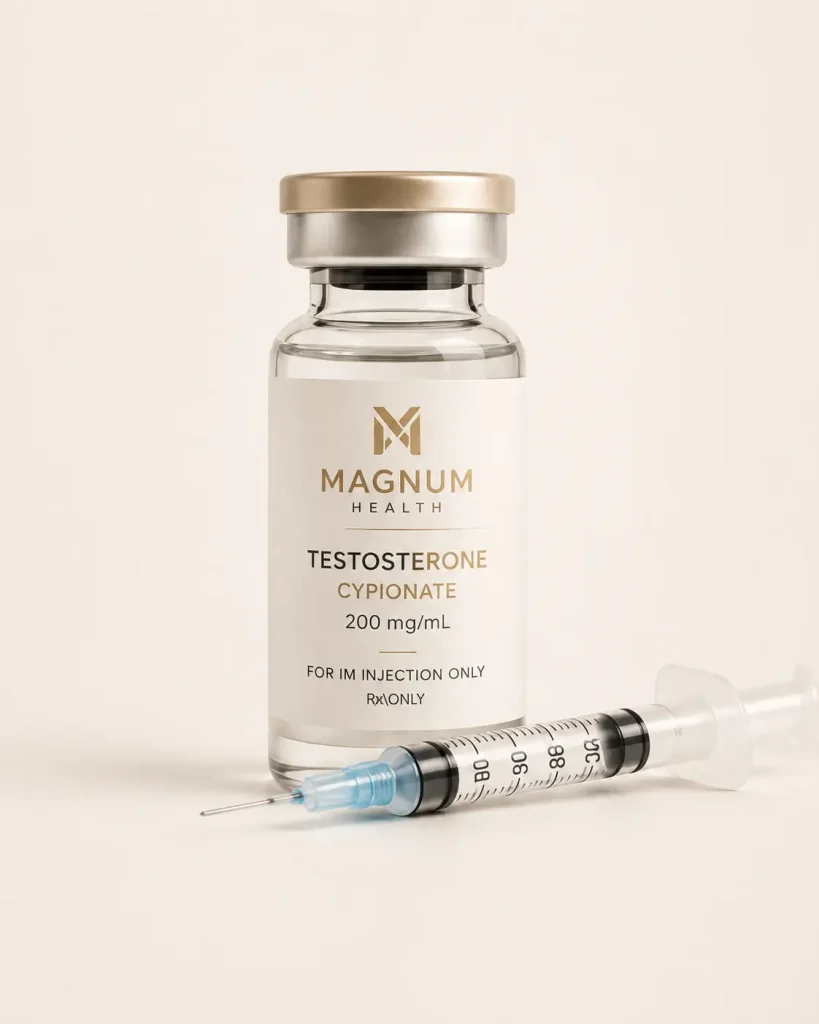
Magnum Health’s testosterone replacement therapy program starts with a provider review and lab testing. Follow-up tracks symptoms and safety during care.
Frequently asked questions
What is the most common cause of low testosterone?
There is no single cause for all men. Excess weight, illness, medicines, poor sleep, aging, and problems with the testicles or hormone signals can all play a role.
Can stress cause low testosterone?
Stress can affect sleep, eating, weight, and hormone signals. But a repeat low result still needs a medical review. Do not assume stress is the only cause.
Can weight loss raise testosterone?
Yes, in some men with excess weight. Results vary. Ongoing symptoms or very low levels still need a medical review.
Does a low result always mean I need TRT?
No. Repeat a low result on another morning. Review your symptoms and find the cause with your provider. Treatment depends on what those steps show.
This article is for general education, not personal medical advice. A low testosterone diagnosis needs symptoms, repeat tests, and a review with a health care provider.