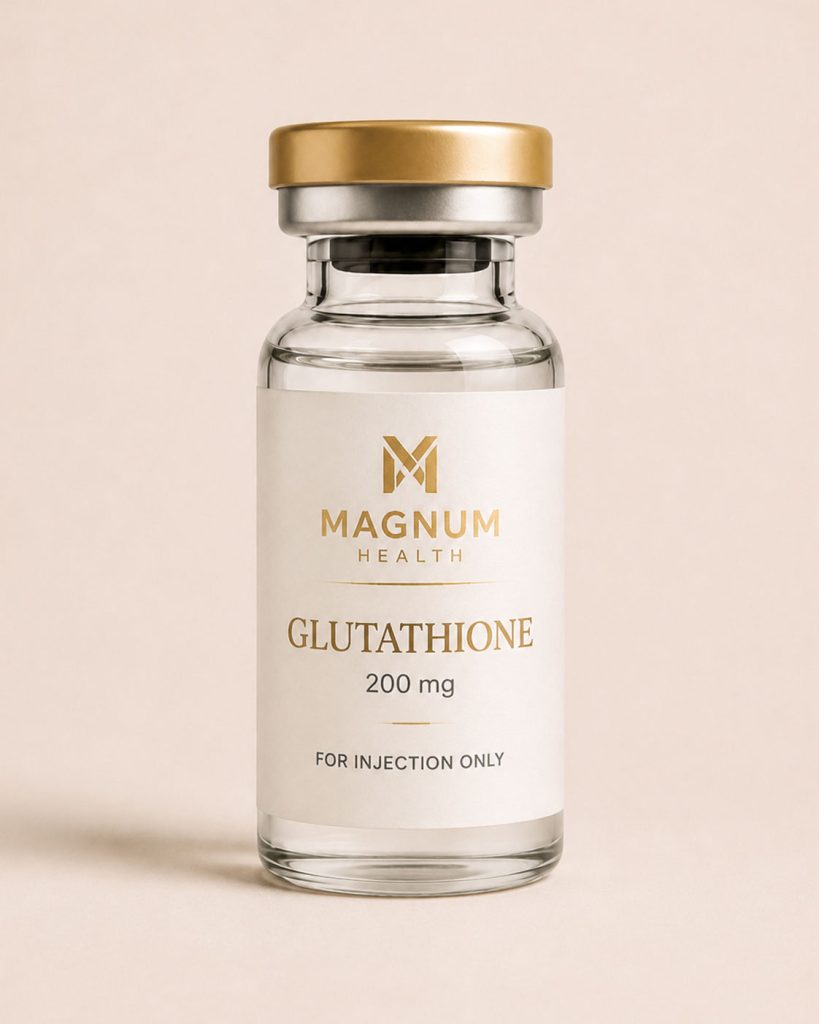
Short answer: Glutathione injections contain an antioxidant your body makes. Claims about detox, energy, anti-aging, or skin lightening often go beyond the evidence. There is no FDA-approved glutathione drug product in the United States. Compounded injections also carry quality and contamination risks.
Before considering an injection, be clear about your goal. Ask what human research supports that goal and how the product is made, given, and monitored.
1. Glutathione is made inside the body
Glutathione is made from three amino acids, the building blocks of proteins. It helps cells limit damage from unstable molecules called free radicals. It also helps the body process certain substances.
An antioxidant helps protect cells, but that does not mean more is always better. A benefit seen in a lab does not prove that injections improve health or symptoms.
2. “Detox” is too vague to be a treatment claim
The liver and kidneys already process waste and many harmful substances. Glutathione takes part in some of that work. An injection has not been shown to give the body a general “cleanse” or undo poor sleep, drinking, or an unbalanced diet.
Ask which specific problem the treatment aims to address and what evidence supports that use.
3. Evidence depends on the specific goal
Studies have tested glutathione by mouth, on the skin, by inhalation, and into a vein. These methods are different. A study of one form cannot prove that a shot has the same effects. Small, short studies also cannot settle long-term safety.
Evidence for skin lightening from injections is limited. It does not show that routine injections are safe or appropriate. Oral and skin-cream studies should not be used to promise injection results.
4. There is no FDA-approved glutathione drug in the U.S.
A pharmacy may prepare a compounded medicine for an individual need. Compounded drugs do not go through FDA review for safety, effectiveness, and quality before they reach patients. This difference matters when weighing an injection.
The ingredient source, sterile preparation, storage, and discard date all matter. An ingredient meant for a dietary supplement should not be used to make an injectable medicine.
5. Contamination can cause serious reactions
In 2019, the FDA reported illnesses after compounded glutathione injections made with contaminated ingredients. People developed symptoms such as vomiting, chills, body aches, or low blood pressure. Some needed hospital care.
In a September 15, 2026 update, CDC described an ongoing investigation into illnesses after glutathione injections made from dietary supplement-grade ingredients. At least three Texas pharmacies had recalled products. This involved specific products and does not mean every injection is contaminated. Ask your provider to check the pharmacy, ingredient source, and current recall notices.
6. Know the side effects and when to get help
Pain, bruising, infection, or an allergic reaction can occur after an injection. Review your health conditions, allergies, medicines, and any cancer treatment with the clinician. Tell them if you are pregnant or breastfeeding.
If you have a recalled product, stop using it and follow the pharmacy’s instructions. Contact your provider promptly for fever, chills, vomiting, dizziness, or worsening redness or pain at the injection site. Trouble breathing, fainting, or other severe symptoms need emergency care.
7. A wellness plan should start with fundamentals
An injection cannot replace sleep, balanced meals, activity, or care for a health problem. Fatigue or “brain fog” may call for a review of sleep, mood, medicines, thyroid health, anemia, or blood sugar.
Custom lab testing should follow your symptoms and history. More tests are not always better. If a therapy is chosen, agree on how to measure benefit and when to stop. Our vitamin B12 injection guide explains why each wellness product needs its own evidence review.
Questions to ask before treatment
- What specific goal are we treating?
- What human evidence supports this route and dose?
- Is the product FDA-approved or compounded?
- Which pharmacy prepared it, and how is sterility protected?
- What side effects require urgent care?
- How will benefit be measured, and when should treatment stop?
Frequently asked questions
Are glutathione injections FDA-approved?
There is no FDA-approved glutathione drug in the United States. Compounded injections do not go through FDA review for safety, effectiveness, and quality before use.
Do glutathione injections detox the body?
Glutathione helps cells do their normal work. This does not prove that an injection cleanses the body or improves your health.
Can glutathione injections lighten skin?
Some small studies have examined cosmetic effects, but evidence and long-term safety are limited. It should not be presented as a guaranteed result.
Who should avoid glutathione injections?
Your provider should review the product, how it is given, your health history, allergies, and other treatments. Tell them if you are pregnant or breastfeeding.
This article is for general education. Before treatment, review your health history, prescription needs, and product source with a licensed clinician.
Sources
- CDC: Injectable Glutathione Safety Investigation, September 2026
- FDA: Do Not Use Dietary Supplement-Grade Glutathione in Injectables
- Clinical Review: Glutathione for Skin Lightening
- FDA: Concerns About Glutathione in Compounded Sterile Injectables
- FDA: Compounding and the FDA
- NIH PubChem: Glutathione