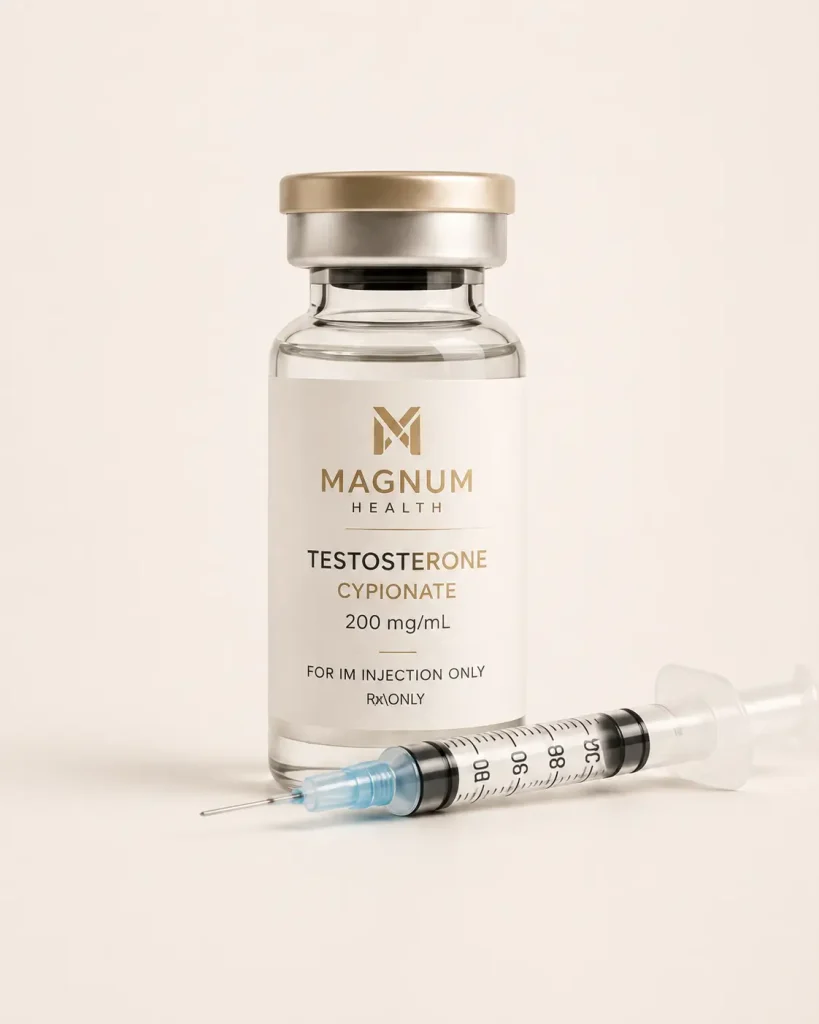
TRT & HORMONE HEALTH

Short answer: High estradiol on TRT can occur because some testosterone is converted to estradiol. A result above a laboratory range does not automatically require treatment. Symptoms, the testosterone dose and timing, body composition, other medical conditions, and the quality of the assay all matter.
Estradiol is not simply a “female hormone.” Men need it for bone health, sexual function, and other normal physiology. The goal of testosterone treatment is not to drive estradiol as low as possible; it is to treat confirmed testosterone deficiency while monitoring the whole clinical picture.
What does high estradiol on TRT mean?
Testosterone can be converted to estradiol through an enzyme called aromatase. When testosterone exposure rises, estradiol may rise as well. That is a predictable biological pathway, not proof that treatment has failed.
The result needs context. A value drawn near a testosterone peak may look different from one drawn later in the dosing interval. Laboratory methods also vary, and reference ranges are not treatment targets for every patient. This is why responsible TRT lab monitoring uses symptoms, examination findings, testosterone levels, blood counts, and other selected markers rather than one isolated estradiol number.
7 critical facts about high estradiol on TRT
1. Symptoms are not specific to estradiol
Breast tenderness, new glandular breast tissue, fluid retention, or changes in sexual function may prompt an evaluation. However, fatigue, mood changes, erectile concerns, and reduced libido can have many causes. Symptoms alone cannot establish that estradiol is “too high.”
2. Gynecomastia and chest fat are different
Gynecomastia is growth of glandular breast tissue. Increased chest fat, sometimes called pseudogynecomastia, can look similar but is not the same process. A clinician may need to examine the area, especially when a lump is one-sided, firm, rapidly changing, painful, or associated with nipple discharge.
3. Testosterone dose and delivery can influence the pattern
Higher-than-needed testosterone exposure may increase conversion to estradiol. Large peaks can also complicate interpretation. Before adding another medication, a clinician may review whether the dose, injection interval, formulation, adherence, or blood-draw timing should be adjusted.
4. Body composition may contribute
Aromatase is active in adipose tissue. Men with more body fat may experience greater conversion of testosterone to estradiol, although individual response varies. Weight management can be part of the long-term plan, but it should not be presented as an instant fix for a hormone result.
5. Other causes still need consideration
Alcohol use, liver disease, thyroid disorders, certain medications, and less common testicular or adrenal conditions can affect the balance of androgens and estrogens. Markedly abnormal results or concerning examination findings deserve a broader evaluation instead of being attributed automatically to TRT.
6. Lower estradiol is not always better
Estradiol contributes to bone mineral density and normal male physiology. Excessive suppression can create its own problems. Aromatase inhibitors are prescription medications with risks and should not be added simply to chase a number or a fixed testosterone-to-estradiol ratio.
7. The best next step is usually a treatment review
A provider may repeat testing, confirm the assay and timing, review symptoms, examine breast tissue, and reassess the testosterone plan. The decision can include observation, a dose or schedule adjustment, evaluation of another cause, or selected treatment when clinically justified.
When might estradiol testing be useful?
Estradiol testing may be considered when a patient develops breast symptoms, has known gynecomastia, has a markedly unexpected hormone pattern, or is being evaluated for another endocrine concern. It is not necessarily required at every visit for every man.
Testing should be interpreted alongside total testosterone and, when useful, free testosterone and SHBG. If you are preparing for an initial evaluation, see the guide to blood tests before TRT. Magnum Health also offers custom lab testing for eligible Texas patients. Patients considering different fertility-preserving approaches can also review TRT vs enclomiphene.
Symptoms that should not wait for a routine visit
Contact a clinician promptly for a new breast mass, nipple discharge, rapidly progressive swelling, a testicular mass, severe headache with vision changes, or other significant new symptoms. Chest pain, sudden shortness of breath, fainting, or symptoms of stroke require urgent medical evaluation and should not be assumed to be a hormone side effect.
Frequently asked questions
Does high estradiol on TRT always need medication?
No. The result may require confirmation and clinical context. Many patients are better served by reviewing testosterone exposure, symptoms, and other causes before another prescription is considered.
Should every man on TRT take an aromatase inhibitor?
No. Routine use is not appropriate for everyone. Suppressing estradiol unnecessarily may cause adverse effects, and the risks and benefits should be evaluated individually.
Can losing weight lower estradiol?
Body-fat reduction may reduce aromatase activity in some men, but outcomes vary. Weight management should be approached as a broader health strategy rather than a guaranteed correction for one laboratory value.
This article is for general educational purposes and does not replace individualized medical advice, diagnosis, or treatment. Hormone testing and treatment decisions vary by patient.