Short answer: Tirzepatide for weight loss may help eligible adults eat less by lowering hunger and helping them feel full longer. It is a prescription medication, not a quick fix. Safe care includes a full health review, gradual dose changes, nutrition support, and follow-up.
Tirzepatide is the active drug in Zepbound and Mounjaro. These brands contain the same active ingredient, but they have different FDA-approved uses. The exact product on the prescription matters.
How does tirzepatide work?
Tirzepatide copies two natural body signals called GIP and GLP-1. These signals help control hunger, fullness, blood sugar, and how fast food leaves the stomach.
Many patients feel full with less food and stay full longer. This can make a calorie deficit easier to maintain. The medication does not melt fat on its own, and it does not replace food choices, movement, sleep, or long-term habits.
Zepbound and Mounjaro are not the same product
Zepbound is an FDA-approved tirzepatide product with uses linked to long-term weight care in eligible patients. Mounjaro is an FDA-approved tirzepatide product with uses linked to type 2 diabetes.
The brands have the same active drug, but FDA approval applies to a certain product, use, and patient group. A clinician should prescribe the exact product that fits the medical goal and explain whether the use is on-label or off-label.
Who may qualify for tirzepatide for weight loss?
Some weight management products may be used in adults with a BMI of 30 or higher. They may also be used at a BMI of 27 or higher when a person has a related health problem, such as high blood pressure, high cholesterol, or type 2 diabetes.
Those numbers are only a starting point. A BMI calculator cannot show body composition, eating patterns, heart risk, pregnancy plans, or whether another condition is affecting weight. A provider must review the whole picture.
How much weight can someone lose?
Clinical trials show that tirzepatide can lead to meaningful average weight loss in eligible groups. Individual results vary widely. Starting weight, dose reached, side effects, food intake, activity, sleep, and length of treatment all affect the result.
An average from a study is not a promise for one patient. Progress should be judged over time. Waist size, blood sugar, blood pressure, strength, energy, and how the plan feels may matter along with the scale.
Why are dose changes gradual?
Tirzepatide treatment often begins with a lower dose and changes in steps. This gives the body time to adjust and may reduce stomach side effects.
There is no safe dose chart that fits every patient. Do not increase early because hunger returns, the scale stalls, or another person uses more. The prescriber should decide when a change is appropriate based on response and side effects.
Common tirzepatide side effects
Nausea, diarrhea, constipation, vomiting, stomach pain, heartburn, and feeling overly full are common. Symptoms may be stronger when treatment starts or the dose changes.
Eating slowly, choosing smaller meals, and getting enough fluids may help. Very rich or large meals can be harder to tolerate. Call the clinician if symptoms keep you from drinking, eating enough, or taking other needed medicines.
Which symptoms need prompt medical advice?
Severe or lasting stomach pain, repeated vomiting, fainting, signs of dehydration, or symptoms of a serious allergic reaction need prompt care. Sudden upper stomach pain, fever, or yellow skin may point to a gallbladder problem.
Low blood sugar can occur when tirzepatide is used with certain diabetes medicines. Patients taking insulin or a sulfonylurea may need a separate blood sugar plan. Read our plain-language guide to GLP-1 side effects.
Who may need a different treatment?
Tirzepatide should not be used during pregnancy. The label also warns against use in people with a personal or family history of medullary thyroid cancer or a condition called MEN 2.
Tell the provider about past pancreas problems, gallbladder disease, kidney disease, severe stomach symptoms, diabetes eye disease, an eating disorder, and every medicine or supplement. The complete warning list depends on the exact product and patient.
Nutrition and muscle protection still matter
Eating much less can make it hard to get enough protein, fiber, fluids, vitamins, and minerals. Weight loss can also include muscle, not only fat.
A useful plan includes protein-rich foods, strength training when safe, daily movement, and enough fluids. Our protein calculator can provide a starting estimate, but kidney health, activity, and food intake may change the goal.
Persistent weakness, dizziness, poor intake, or rapid loss may mean the plan needs review. More weight loss is not always better when nutrition and strength are falling.
What lab work may be needed?
Not every patient needs the same panel. A provider may review blood sugar, A1C, kidney function, liver tests, thyroid results, or pregnancy testing based on the health history and other medicines.
Lab work is used to answer a safety question or follow a known condition. Normal labs do not guarantee a prescription. Abnormal labs do not always rule out all weight treatment. The result must be interpreted in context.
What should follow-up include?
Follow-up should review weight trend, hunger, fullness, stomach symptoms, bowel habits, food and fluid intake, activity, sleep, and the ability to follow the plan. Blood pressure, blood sugar, and labs may also be checked.
A patient should know when the next visit is due, what symptoms should trigger a call, and how the clinic handles refill questions. Good medical weight loss care should not end when the prescription is sent.
What if weight loss slows?
A plateau can occur even when the medication is still helping. Fluid changes, constipation, lower energy use after weight loss, missed doses, sleep, stress, and food intake can all affect the scale.
Before raising a dose, the provider may review the full trend and the habits around it. A dose change is only one option. Sometimes the best next step is more protein, strength work, a smaller calorie gap, better side-effect control, or time.
Approved brands and compounded tirzepatide
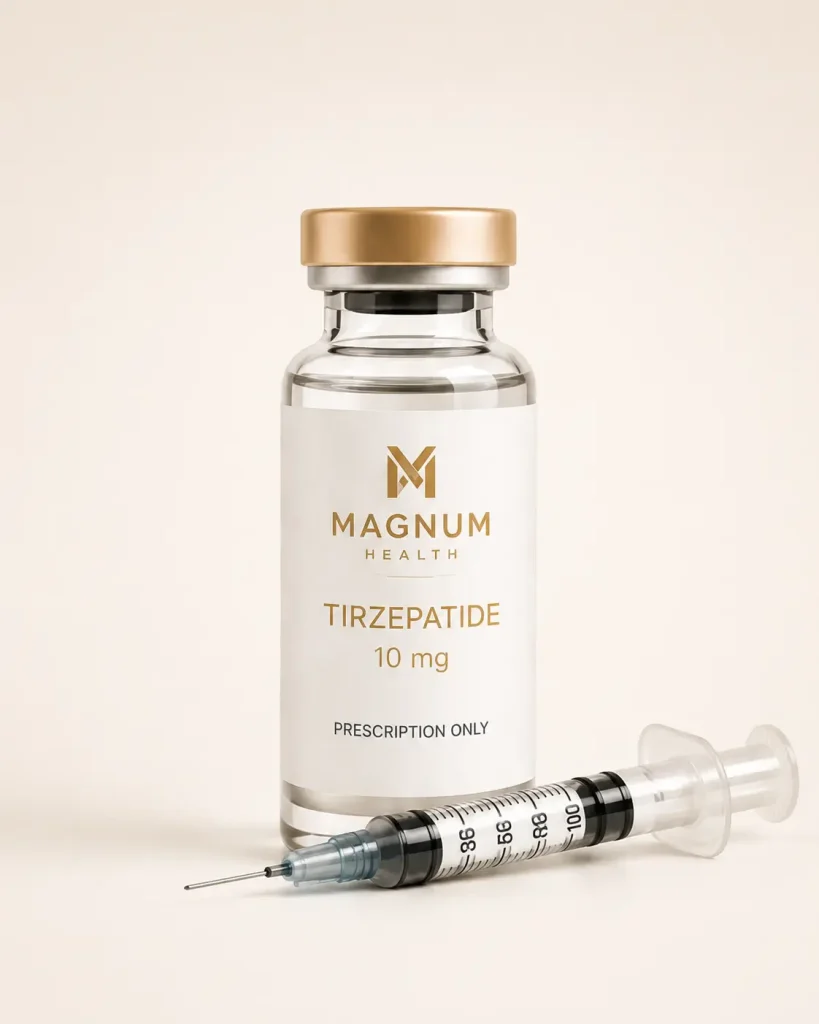
Compounded tirzepatide is not an FDA-approved generic form of Zepbound or Mounjaro. The FDA does not review compounded drugs for safety, effectiveness, or quality before marketing.
If a compounded product is prescribed for a specific patient need, the label should clearly show the drug, concentration, amount, pharmacy, storage, and directions. Never assume two vials contain the same concentration.
Tirzepatide vs. semaglutide
Tirzepatide works on GIP and GLP-1. Semaglutide works mainly on GLP-1. Both can support weight loss, and both can cause stomach side effects.
One is not automatically best for every person. Health history, prior response, side effects, cost, coverage, and product access all matter. Read our semaglutide vs. tirzepatide comparison for more detail.
Frequently asked questions
Is tirzepatide insulin?
No. Tirzepatide is not insulin. It acts on GIP and GLP-1 signals that affect hunger, digestion, and blood sugar.
Can tirzepatide be prescribed online?
A licensed provider may evaluate an eligible patient through telehealth where allowed. A prescription is never guaranteed.
How fast does tirzepatide work?
Some people notice less hunger early, but body weight changes over time. The dose is usually changed slowly, and results vary.
Do patients regain weight after stopping?
Hunger and weight can return after treatment ends. A long-term plan should address food, activity, sleep, and what happens if the medicine is reduced or stopped.
This article is for general educational purposes and does not replace individualized medical advice, diagnosis, or treatment. Medication is prescribed only after an appropriate medical evaluation.
Compounded medications are not FDA-approved. The FDA does not review them for safety, effectiveness, or quality before marketing.